Personal agents just got a front door to every company. Today the Personal Agent Protocol ships 1.0, and Ora joins it as an official design partner. Ora is where a company finds out whether that door actually opens.
Your agent can already read a company's website. What it can't do is act for you there in a way the company recognizes and you control. Today it gets blocked, or it signs in as you with everything your password unlocks. Companies spend effort detecting agents. Agents spend effort getting past them.
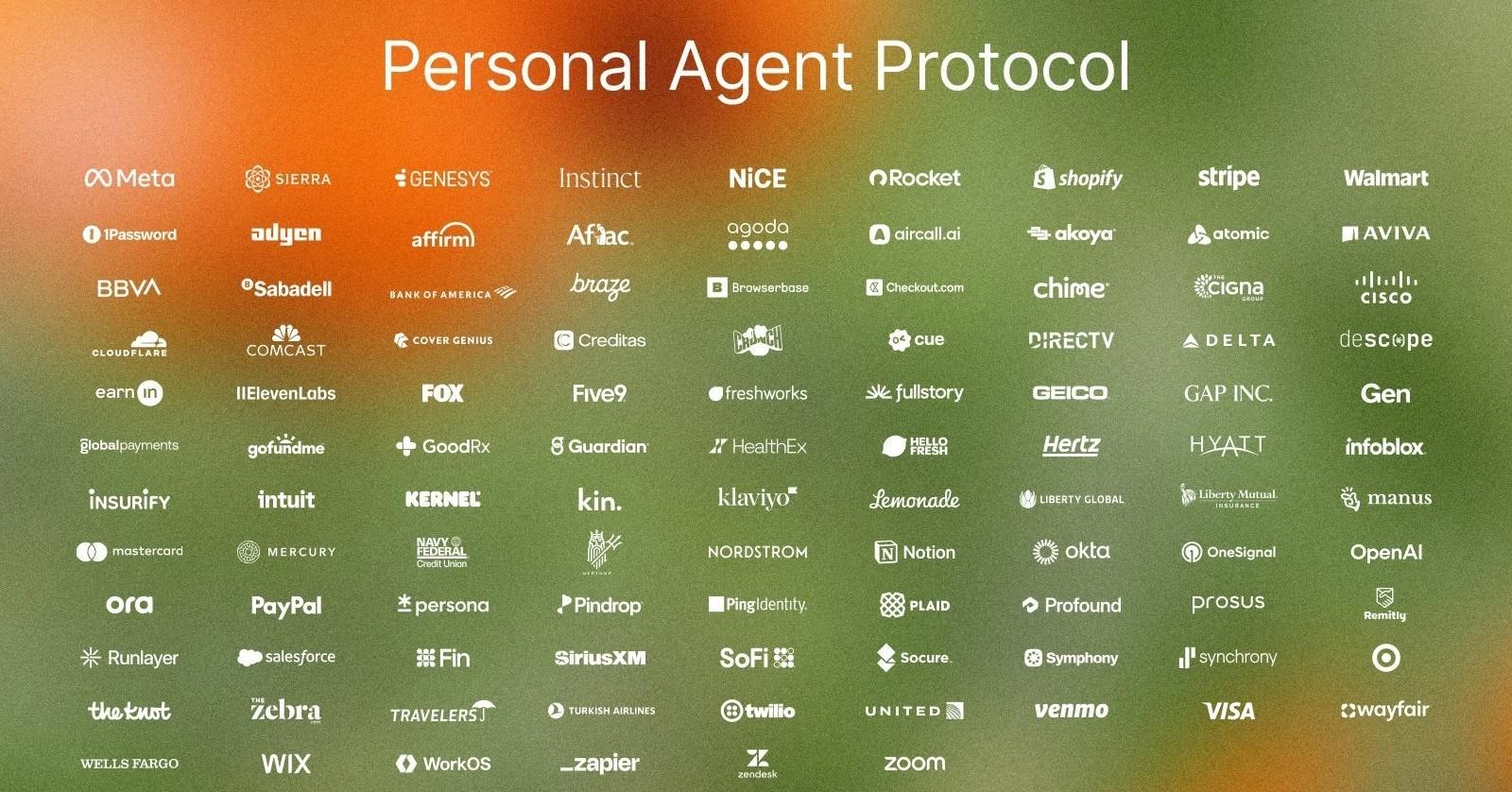
The Personal Agent Protocol, Poppy for short, ends that standoff. Meta and Sierra introduced it in October, and 1.0 is out today. Ora joins them, along with OpenAI, Shopify, Stripe and Walmart, as a design partner, and has been part of the protocol from the start.
What 1.0 gives agents and companies
- A company publishes one file,
/.well-known/poppy.json. It names the company, its APIs, its website and its own agent, and the access an agent can ask for. - The person signs in on the company's own page, through standard OAuth, and chooses what to grant. The agent never holds the password.
- One session covers API calls, conversations and web pages, so the company sees one customer across all three.
- Companies start from what they already run: OpenAPI, MCP, web pages, or a company agent of their own.
- 01BlockedThe agent gets nothing
- 02Search roomsAny agent, no sign-in
- 03See reservationsSigned in, with the scope the guest granted
- 04Book a roomSigned in, after the guest approves
- 05Full accessThe agent signs in as the guest
Ora has graded Poppy since the first draft
A protocol only works if companies implement it correctly. One wrong field in poppy.json, one missing line in the sign-in metadata, and every agent stops at the door. Nobody sees the failure. The agent just goes somewhere else.
So we started early. Draft 0.1 was published on October 9. Ora shipped its first Poppy checks the next day. Every draft since, Ora has read the spec, updated its checks and published them, and 1.0 was graded on the day it shipped.
What Ora gives every company on Poppy
- A full report at ora.ai/pap. ora.ai/pap/<domain> reads a company's poppy.json and checks it against the spec, one requirement per row. Every row links its section of the spec and says how serious a miss is, from one that stops every agent to a recommendation.
- The check an agent would run. Ora follows the file the way an agent does: discovery, the sign-in server, the APIs and the conversation endpoints. It sends at most six requests to a company's endpoints, and it never signs in, never joins a session and never sends a token.
- Every version, graded on its own terms. A file written for an earlier draft is graded by that draft, and the report says exactly what to change for 1.0.
- Poppy in every Ora scan. Every scan on ora.ai includes six Poppy checks, so a company sees its Poppy setup next to the rest of its agent readiness.
- A poppy.json written for you. Ora drafts one from your last scan, valid as it is, with notes on what to add for sign-in. Agents can ask for it through the
generate_agent_filestool on Ora's MCP server. - Ora can run it for you. In the managed pilot, Ora sets up and hosts your poppy.json. Join the waitlist at ora.ai/pap/managed.
- The plain guide. poppy.ax, built by Ora, explains the protocol in plain words and walks a company through setting it up.
The rollout starts today
Shopify has turned Poppy on for every merchant on its platform. Mercury, Synchrony and Turkish Airlines are going live. Every company that publishes a poppy.json this month needs to know one thing: can an agent actually get in?
That is the question Ora answers. Agents already rely on Ora to decide which products they can work with. With Poppy, Ora can tell them which companies have opened the door, and tell each company how to open it.
Get ready for 1.0 in three steps
- Publish
/.well-known/poppy.jsonwith"protocol_version": "1.0". Start from the draft Ora writes for you, or from the official implementation kit. - Point agents at your sign-in. Name your OAuth server in your domain's protected resource metadata, and list your domain in that server's metadata.
- Run your domain through ora.ai/pap and fix what the report flags, starting with the rows that stop every agent.
Poppy defines how a personal agent gets into a company. Ora checks, for any company, whether an agent that follows it gets in.
Congratulations to the teams at Sierra and Meta and to every design partner on shipping 1.0. We're proud to help build what comes next.
Check your company's poppy.json at ora.ai/pap. Read the 1.0 spec at personalagentprotocol.org.